How We Built My Appliance to Convert Local Search Traffic
A breakdown of every design and SEO decision we made on My Appliance, and which specific elements turned high-intent searchers into booked appointments.
The Problem With Most Local Service Websites
Someone's washing machine stops working on a Tuesday morning. They grab their phone and search "appliance repair near me." They have high intent. They are ready to book. They click the first result that isn't a national chain.
Then the site takes 5 seconds to load. The phone number is in the top-right corner in 10px gray text. There's a hero image of a smiling stock-photo technician. The only call to action is a contact form that asks for their address, their appliance brand, the model number, and a description of the problem.
They hit the back button in under 8 seconds.
That's not a traffic problem. That's a conversion problem. And it's the exact problem we set out to fix when we built the My Appliance website.
Who My Appliance Is and What the Stakes Were
My Appliance is a local appliance repair service operating across multiple cities. Their business model depends almost entirely on two things: ranking for local search terms and converting visitors into phone calls or booked appointments.
There is no brand recognition advantage here. No referral flywheel in the early stages. Just search traffic and the 8 seconds a user spends deciding whether to call or bounce.
When they came to us, they had a basic site that was pulling in some traffic but converting poorly. The phone was not ringing the way it should have been for their search volume. We needed to figure out why, then fix it.
Step One: Understand What High-Intent Looks Like
Not all traffic is equal. Someone searching "what causes a washing machine to smell" is curious. Someone searching "washing machine repair [city name] same day" is ready to spend money.
We mapped every realistic keyword a ready-to-book customer would type. We grouped them by appliance type and by city. That mapping became the structural backbone of the site.
This is where most local service sites miss. They build one "services" page and list every appliance they fix. That one page cannot rank competitively for "dryer repair in Marietta" and "refrigerator repair in Alpharetta" at the same time. You need dedicated pages for each combination that matters.
The Architecture: Service Area Pages That Actually Rank
We built individual landing pages for each city and appliance pairing. Each page was written around a specific search intent, not copy-pasted with the city name swapped in.
The structure of each page followed the same logic:
- Lead with the specific service and location in the H1
- Address the user's immediate concern (fast response, same-day availability, certified technicians)
- Show trust signals before asking for anything
- Make the conversion action impossible to miss
This is not new SEO theory. But most local businesses either do not know it or do not execute it consistently. We built the templates, wrote the content, and made sure each page passed Core Web Vitals before it went live.
The Conversion Layer: What Happens After They Land
Ranking gets you traffic. The page gets you the call.
We made three specific design decisions that had the biggest impact on conversion rate.
Click-to-call was fixed on mobile at all times. No matter where a user scrolled, the call button was visible. On a mobile device, 70% of local service searches result in a direct phone call. Hiding the number, even slightly, costs you bookings. We made it a floating element that never left the screen.
We put social proof before the form, not after it. The instinct is to put testimonials at the bottom of the page. But by the time a skeptical user reaches the bottom, they have already decided. We placed a tight block of verified reviews directly above the contact section. The sequence became: here is the service, here is why people trust us, here is how to book. That sequence matters.
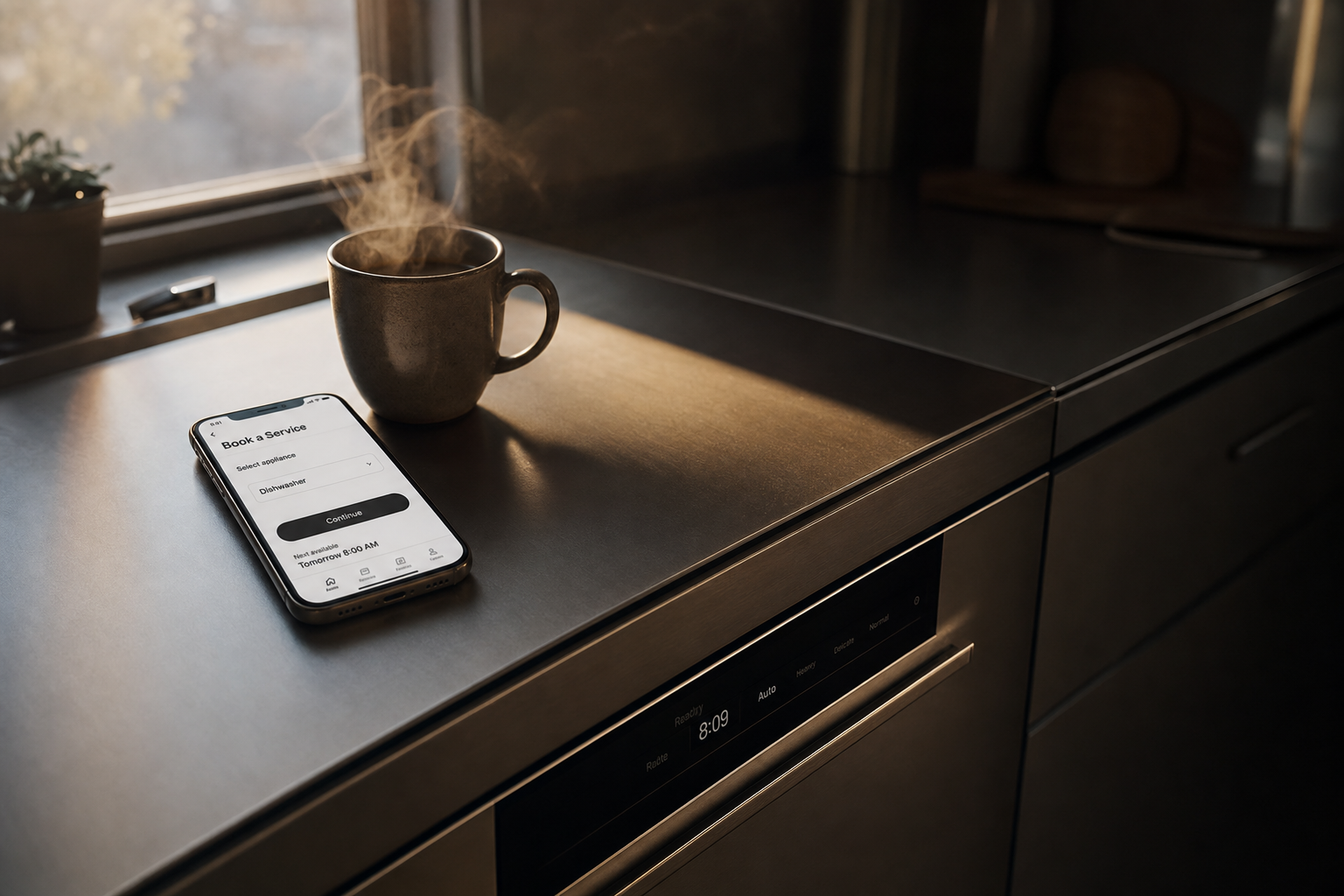
We cut the booking form from 7 fields to 3. Name, phone number, appliance type. That is all we needed to get the conversation started. The technician can ask about the model number when they call back. Every additional field you add to a form is a small reason to abandon it. We stopped asking for information we did not need in that moment.
Page Speed Was Not an Afterthought
A one-second delay in mobile load time can reduce conversions by up to 20%. That is not a rounding error for a business living on inbound calls.
We optimized every image, deferred non-critical scripts, and used a CDN to serve assets faster to users across different cities. The site consistently scored above 90 on Google PageSpeed Insights for mobile. That score is a ranking factor and a conversion factor at the same time.
What the Numbers Showed
After the rebuild, organic traffic increased as the city-specific pages began ranking for targeted local queries. More importantly, the conversion rate on that traffic improved significantly. The same number of visitors was producing more phone calls and form submissions.
The phone number was easier to find. The trust was established faster. The booking path had less friction.
None of it was complicated. It was disciplined.
The Takeaway for Any Local Service Business
If you run a local service business or you are building a site for one, start by answering one question honestly: can a person who has never heard of you, landing on your homepage on a mobile phone at 7am with a broken appliance, find your phone number and a reason to call you within 8 seconds?
If the answer is no, that is where to start. Not with a rebrand. Not with a new logo. With the phone number, the trust signal, and the single clear action you want them to take.
Get those three things right first. Then build everything else around them.